
Universidad Mayor de San Andrés · Bolivia
At 5,200 metres above sea level, in the Bolivian Andes, the Chacaltaya Cosmic Ray Laboratory has been doing frontier science for eighty years. And it has never stopped.
Chacaltaya is not a monument to something that happened. It is a place where science was done, is done, and will be done.
From a 1942 weather station to the particle that explained why the atomic nucleus does not fall apart, and to the scientific institutions that were born of that finding in two countries.
The mountain is still measuring. It monitors the global atmosphere for the World Meteorological Organization and is preparing to see the southern sky in gamma rays as nobody has seen it.
Why this site meets the conditions to be recognised as scientific heritage of humanity, what evidence supports it, and how it can be supported.
"… the IUPAP Commission considers that these two experimental sites are essential for research in this scientific field."
 CBPF · IIF–UMSA archive · ⚠ rights to be confirmed
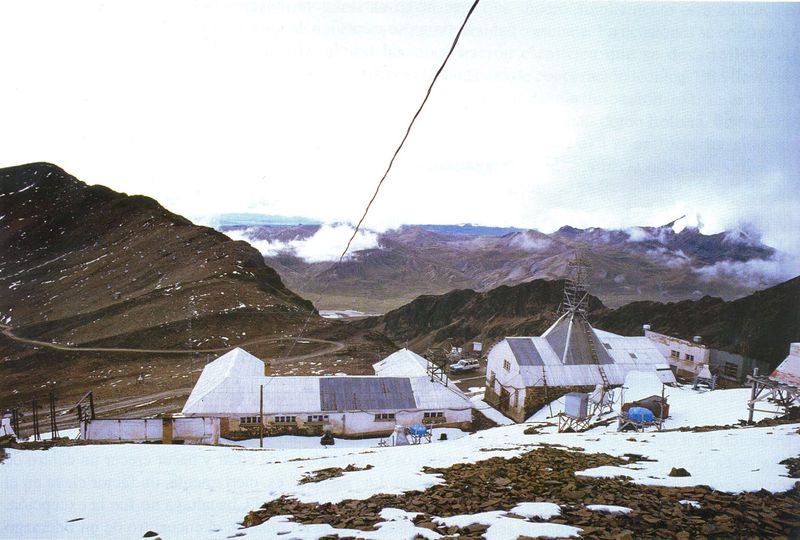
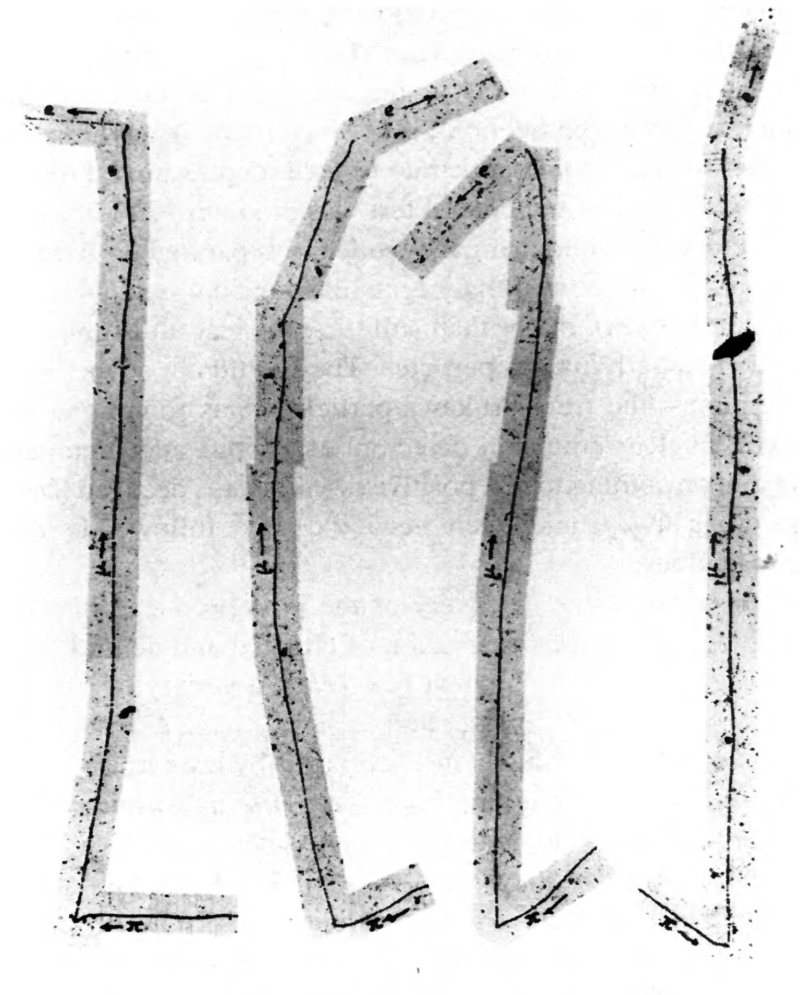
In 1947 there was no laboratory on Mount Chacaltaya. There was a hut belonging to the Bolivian Andean Club, a five-year-old weather station and a dirt road. It was enough. The photographic plates a 22-year-old Brazilian physicist left there for a few weeks contained the proof physics had been looking for over twelve years.
In October of that year, the word "Chacaltaya" entered the world scientific literature.
Read the full milestone →A mountain that has not stopped measuring since 1942.
The site of the discovery is not a commemorative ruin. In 2026 it is still taking data.
Andes Large-area PArticle detector for Cosmic rays and Astronomy. A surface array of 83,000 m² with a 5,400 m² underground muon detector, at 4,740 m altitude. It is being built right now: the surface array is already on the plateau and the muon detector is still under construction. It will be the first instrument capable of observing the southern sky in gamma rays above 100 TeV. Its prototype, ALPAQUITA, is already taking data.
Global Atmosphere Watch station of the World Meteorological Organization: one of the very few high-altitude global stations on the planet. It measures the composition of the free troposphere of the southern hemisphere, on a mountain whose glacier disappeared in 2009.
Two Nobel Prizes in Physics rest on plates exposed on this mountain. From that evidence came scientific institutions in two countries. And eighty years later the site is still at the frontier of its discipline. The UNESCO nomination asks for formal recognition of a relationship the organisation itself began in 1951.
