
There is one question any committee may put to any nomination: what has this place to do with us? In this case the answer has been on record for seventy years, and it was not Bolivia that wrote it. UNESCO paid for part of the work that made this mountain famous, trained a generation of Latin American physicists here, published the proceedings of its congresses with its own name on the cover, lent its Director of Natural Sciences to obtain a telescope for it, sent a physicist to work on it, and made it the headquarters of one of its flagship programmes.
1951–1952: UNESCO pays for the expedition
When César Lattes returned from the United States determined to build a permanent high-altitude laboratory, he had no means of doing so. Support came from two quarters: the newly founded Brazilian CNPq and UNESCO.
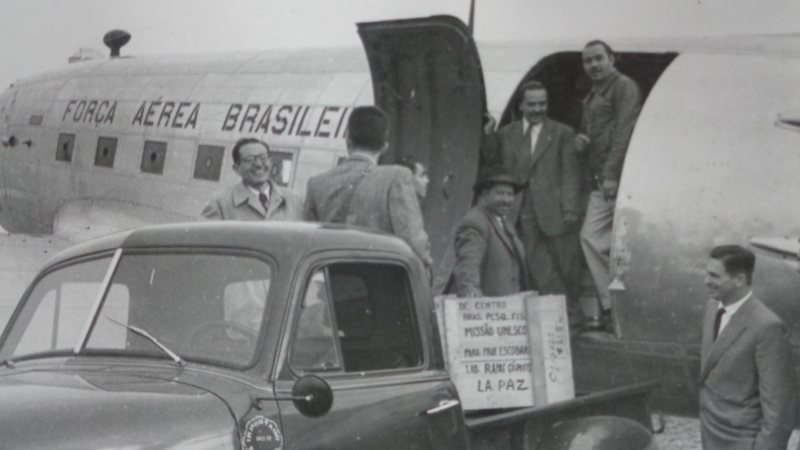
With those funds he was able to bring to Brazil Giuseppe Occhialini — his former professor in São Paulo and co-discoverer of the pion — and Ugo Camerini, both colleagues of his in Bristol. The expedition to Chacaltaya that followed marked, according to Vieira and Videira, a significant leap in the history of Brazilian experimental physics in terms of its resources, its logistics, the number of participants and the equipment involved.
Put another way: UNESCO funded the human team that turned the mountain into a laboratory.
1955: training a whole region
In 1955, in collaboration with UNESCO, the First Inter-American Course on Modern Physics was organised in La Paz. Physicists attended from Argentina, Bolivia, Brazil, Chile, Ecuador and Paraguay.
One of the instructors was the Argentine Mario Bunge, who would become one of the most widely read philosophers of science of the century. During his stay in La Paz, and in connection with the course, he **published his work *La Edad del Universo*** (The Age of the Universe).
Editorial note. This fact deserves to be told in its own right: in 1955 a Bolivian mountain was producing not only physics but also philosophy of science. It is the kind of detail a committee remembers.
1957: the first seminar, international from the start
In 1957, again with the cooperation of UNESCO, the First Inter-American Seminar on Cosmic Rays was held. Close to fifty papers were presented, and not only by scientists from the region: also from England and the United States.
Aguirre underlines the point: from then on, the Inter-American Seminar series was always international in character. It was born pan-American and became worldwide in its very first edition.
1957: Pierre Auger obtains a telescope
This episode deserves to be told slowly, because it shows UNESCO not as a distant funder but as a direct participant.
At the International Cosmic Ray Congress in Mexico, in 1956, the Indian physicist Vikram Sarabhai — founder of India's space programme — spoke for the first time with Ismael Escobar about the possibility of installing a meson telescope at Chacaltaya. The idea was good and simple: the Physical Research Laboratory in Ahmedabad already operated two telescopes of similar design in India, and a third in the Andes would make it possible to compare the same phenomenon at different altitudes and different geomagnetic latitudes.
The means were lacking. Escobar and Sarabhai turned to Pierre Auger, then Director of Natural Sciences at UNESCO — and no ordinary official: Auger is the discoverer of extensive air showers, the very phenomenon under study on that mountain. Auger provided the means and the collaboration became possible.
In 1957 a cubical meson telescope reached Chacaltaya, able to operate as a vertical, medium-angle and closed telescope. Over the years the participants included Doctors Narayan Nerurkar, Harjit Ahluwalia, M. S. Danjhu and Lek Vir Sud.
A French physicist who had discovered extensive air showers arranged, from a UNESCO office in Paris, for an Indian instrument to be taken up a Bolivian mountain. It is hard to imagine a more precise illustration of what the organization says it does.
1962: UNESCO signs the proceedings
In 1962 the fifth Inter-American Seminar on Cosmic Rays was held in La Paz, organised by the Laboratory and UNESCO. And here there is a detail worth more than many letters of support: the proceedings were published in the name of both institutions.
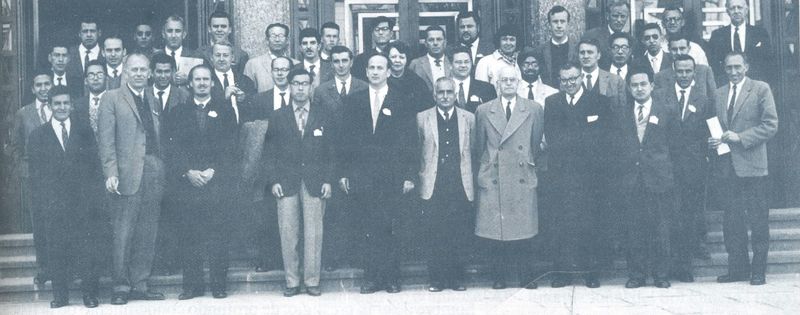
Fifth Interamerican Seminar on Cosmic Rays, La Paz, Bolivia, July 17–27, vol. 1. UNESCO and Laboratorio de Física Cósmica, September 1962.
That is to say: there exists a scientific publication, traceable in libraries, with the name of UNESCO and that of the Laboratory on the same cover.
In the concluding remarks, Professor Kenneth Greisen, of Cornell University, wrote:
"… I found 42 speakers from 11 different countries, presenting a total of 58 lectures … I found also that all the papers contained important new observations …"
1970: the sixth and last
The sixth Inter-American Seminar on Cosmic Rays was held in La Paz in 1970. It was the last of the series. The organising committee was made up of Ramón H. Schulczewski, Gastón Mejía and Carlos Aguirre Bastos, and President Alfredo Ovando Candia gave a reception in honour of the participants.
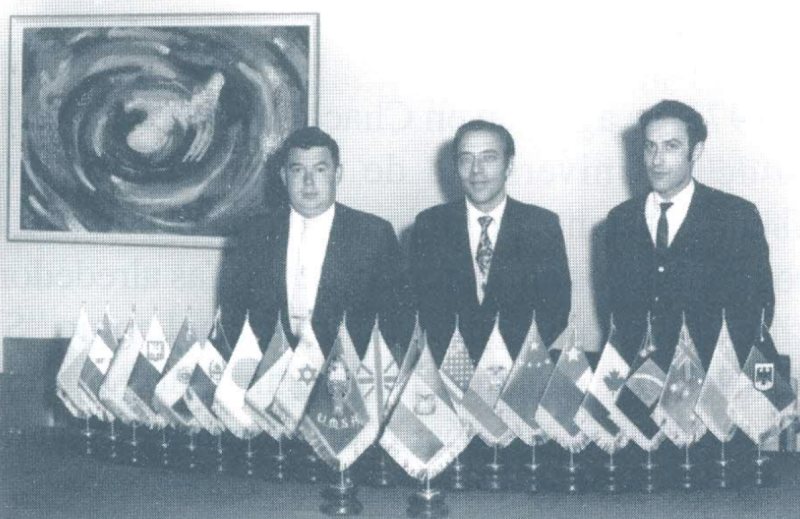
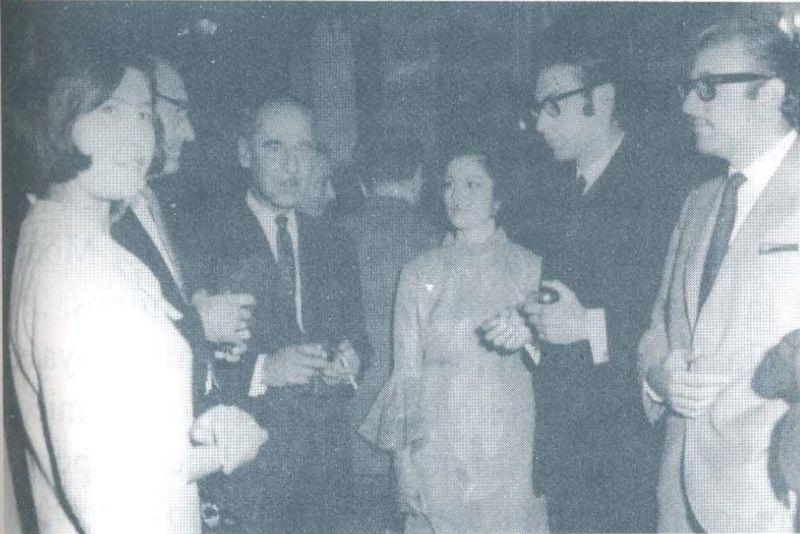
That a head of state should receive the attendees of a cosmic-ray congress says something about the place this Laboratory held in the country.
UNESCO also sent people
Two particular individuals, worth naming because they give the relationship a human face:
- Ángel Establier, Director of the UNESCO Field Science Office for Latin America, in Montevideo, to whom Aguirre credits an important supporting role in the nineteen-fifties, alongside the university rectors of the time.
- L. Mattson, a physicist "from UNESCO" — that is how Aguirre records it — who took part in experiments at the Laboratory during the fifties and sixties, alongside such names as R. Armenteros (Spain), Giuseppe Occhialini (Italy) and Vicente Domingo (Spain).
The organization did not merely sign cheques and covers: it put physicists to work on the mountain.
After 1975: programme headquarters
The relationship did not end with the seminars. Later on:
- The Institute became the headquarters of UNESCO's Man and the Biosphere (MAB) International Programme, opening the way to the later work in ecology, the environment and natural resources. Carlos Aguirre chaired the Committee during a period of great activity, nationally and internationally.
- The studies of the Charaña–San Borja Andean crustal geotransect gave rise to the worldwide geotransect programme of the International Lithosphere Programme of UNESCO–IUGG–IGG.
A flagship UNESCO programme had its Bolivian headquarters in this institution, and a worldwide UNESCO programme grew out of work done here.
Chronology of the milestone
| Date | Event |
|---|---|
| 1951–1952 | UNESCO and the CNPq fund Lattes's work, making it possible to bring Occhialini and Camerini to Brazil for the expedition to Chacaltaya. |
| 1955 | First Inter-American Course on Modern Physics, in collaboration with UNESCO. Six countries. Mario Bunge publishes La Edad del Universo in La Paz. |
| 1956 | Sarabhai and Escobar discuss the telescope at the International Cosmic Ray Congress in Mexico. |
| 1957 | First Inter-American Seminar on Cosmic Rays, with the cooperation of UNESCO: close to 50 papers, with participation from England and the United States. |
| 1957 | Pierre Auger, Director of Natural Sciences at UNESCO, provides the means to install the meson telescope of the Physical Research Laboratory in Ahmedabad. |
| 1950s–60s | The physicist L. Mattson, sent from UNESCO, takes part in experiments at the Laboratory. Ángel Establier gives support from the Montevideo Office. |
| 1962 | Fifth Inter-American Seminar, organised by the Laboratory and UNESCO. 42 speakers from 11 countries, 58 lectures. Proceedings published in the name of both institutions. |
| 1970 | Sixth Inter-American Seminar, the last of the series. Reception given by President Ovando Candia. |
| 1970s | The Institute becomes the headquarters of UNESCO's MAB Programme. |
| 1970s | The Charaña–San Borja geotransect gives rise to the worldwide geotransect programme of the International Lithosphere Programme (UNESCO–IUGG–IGG). |
Open points
⚠ Seminars II, III and IV. Aguirre documents the first (1957), the fifth (1962) and the sixth (1970), but gives neither dates nor venues for those in between. Locating their proceedings and establishing whether they too had UNESCO cooperation would complete the series and reinforce the argument of continuity. It is a visible gap in the dossier.
⚠ The 1951–1952 funding instrument. We know from Vieira and Videira that UNESCO gave financial support to Lattes's work, but we do not have the document: agreement, resolution or budget line. Locating it in the UNESCO archives in Paris would be the piece that opens the dossier. A document of the organization itself, seventy-five years old, funding the work at this site.
⚠ L. Mattson. Aguirre gives only the initial. Establish the full name and the period of his stay.
⚠ The exact date of the MAB designation. Aguirre says "at this time" without specifying the year in which the Institute became the headquarters of the programme. Pin it down.
⚠ The meson telescope. Check whether the 1957 instrument — or any of its parts — is preserved at the Instituto de Investigaciones Físicas. It would be a museum object with an unbeatable story: an Indian instrument, arranged by a French physicist from UNESCO, operating in Bolivia.
People of this milestone
- Pierre Auger (1899–1993). French physicist, discoverer of extensive air showers. Director of Natural Sciences at UNESCO. Provided the means for the Ahmedabad telescope, 1957. Deserves his own, prominent entry: he is the strongest personal link between UNESCO and this site.
- Vikram Sarabhai (1919–1971). Indian physicist, founder of India's space programme. Prime mover behind the meson telescope installed at Chacaltaya.
- Mario Bunge (1919–2020). Argentine philosopher of science. Instructor on the First Inter-American Course on Modern Physics, 1955. Published La Edad del Universo during his stay in La Paz.
- Kenneth Greisen (1918–2007). Physicist at Cornell. Author of the concluding remarks of the fifth Seminar, 1962.
- Ángel Establier. Director of the UNESCO Field Science Office for Latin America, Montevideo. Institutional support in the nineteen-fifties.
- L. Mattson. Physicist sent from UNESCO; took part in experiments at the Laboratory.
- Narayan Nerurkar, Harjit Ahluwalia, M. S. Danjhu, Lek Vir Sud. Physicists of the Physical Research Laboratory in Ahmedabad who worked with the meson telescope.
- Ramón H. Schulczewski, Gastón Mejía Brown, Carlos Aguirre Bastos. Organising committee of the sixth Seminar, 1970.
- Alfredo Ovando Candia. President of Bolivia; received the participants of the sixth Seminar.
The case for the UNESCO nomination
Short form (for the page):
The organization to which this nomination is addressed funded the work that made the site famous, trained a generation of Latin American physicists here, co-published the proceedings of its congresses, lent its Director of Natural Sciences to equip it, sent a physicist to work on it and made it the headquarters of one of its flagship programmes. The nomination does not inaugurate a relationship: it asks for formal recognition of one UNESCO began in 1951.
Developed form (for the dossier):
- A documented, continuous relationship of five distinct kinds. Funding (1951–52), training (1955), co-organisation and co-publication (1957, 1962, 1970), equipment obtained through the direct action of its Natural Sciences Department (1957) and programme headquarters (MAB, nineteen-seventies). This is not a one-off connection or a letter of support: it is twenty-five years and five different forms.
- A document exists bearing both names. The proceedings of the fifth Seminar were published in the name of "UNESCO and Laboratorio de Física Cósmica" in September 1962. It is a traceable object in libraries around the world, attesting to institutional co-authorship. It must be reproduced in the dossier.
- A personal link of exceptional symbolic weight. Pierre Auger, discoverer of the phenomenon studied on this mountain, acted from within UNESCO to equip it. That the man who gave his name to Auger showers intervened personally to provide this site with instruments connects the history of the discipline, that of the organization and that of the place in a single documented gesture.
- Effective fulfilment of UNESCO's mission. For decades, and with minimal resources, the site did exactly what the organization declares it seeks to promote: international scientific cooperation, transfer of capabilities to developing countries and regional training. The First Inter-American Course trained physicists from six countries; the seminars brought together physicists from eleven. The property is not merely a place where science happened: it is a place where UNESCO's science policy worked.
- The relationship is still alive. The line that begins with MAB and the International Lithosphere Programme continues today in the GAW/CHC station of the World Meteorological Organization (see milestone 09). The link with the United Nations system has never been broken.
Sources
- Carlos Aguirre Bastos, Medio siglo de ciencia en Bolivia. El Laboratorio de Física Cósmica de Chacaltaya de la Universidad Mayor de San Andrés, Fundación Universitaria Simón I. Patiño, La Paz, 1996, chs. V–VII.
- K. Greisen, "Concluding Remarks", in Fifth Interamerican Seminar on Cosmic Rays, La Paz, Bolivia, July 17–27, vol. 1, UNESCO and Laboratorio de Física Cósmica, September 1962.
- Cássio Leite Vieira and Antonio Augusto Passos Videira, "Chacaltaya: um laboratório nas nuvens", in História da Física (2019), pp. 129–141.
- Y. Fujimoto, "Brazil–Japan Collaboration Experiment at Chacaltaya", in Topics in Cosmic Ray Physics.
- Mario Bunge, La Edad del Universo, La Paz, 1955. ⚠ Publication details to be completed.
- LabFisCos leaflet (70 years) and Línea de tiempo del Laboratorio de Física Cósmica (Timeline of the Cosmic Ray Laboratory), IIF–UMSA.
This site is being built
The Chacaltaya Cosmic Ray Laboratory is a candidate for World Heritage status. If you hold documents, photographs or memories of the Laboratory, the project would like to hear from you.
Get in touch